


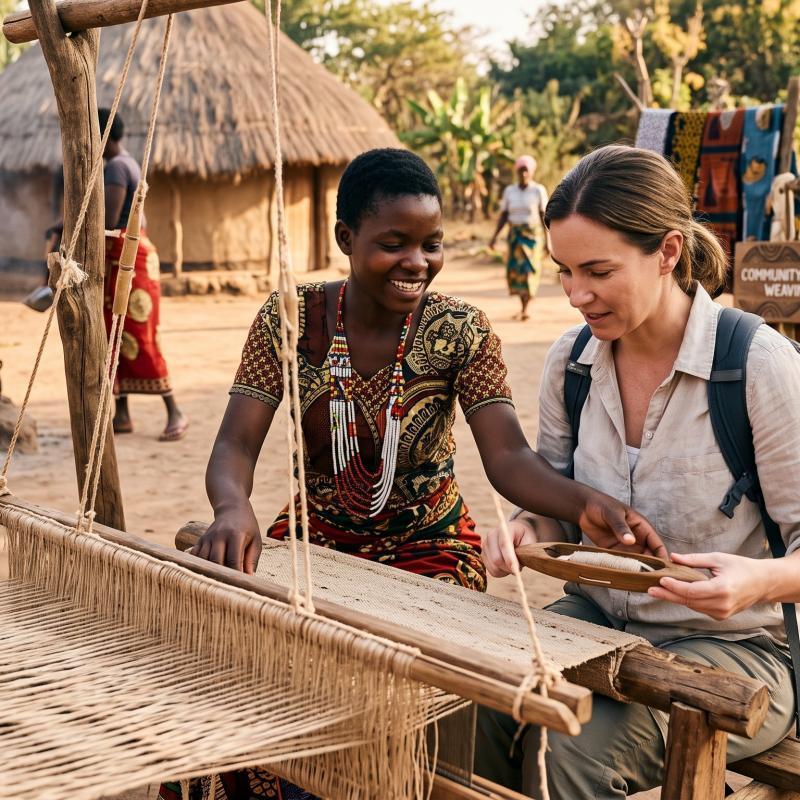
Are we overlooking one of Africa's greatest tourism assets? This article explores how culture, everyday local experiences, and community involvement could help transform tourism across Sub-Saharan Africa.
I have had the privilege of travelling in Southeast Asia this year, and most recently I had the opportunity to visit Bali, Indonesia. Yes, the place is beautiful, and I certainly had a relaxing experience. Beyond the beaches, waterfalls, and stunning landscapes, however, I found myself asking a deeper question: what makes Bali so captivating? Why does it feature so prominently on so many people's bucket lists?
As Africans, we are blessed with spectacular landscapes, breathtaking wildlife, and incredible natural beauty. Yet many of our destinations do not enjoy the same global appeal as places like Bali. That observation left me wondering whether we are fully leveraging one of our greatest assets: our culture.
What struck me most about Bali was not that its culture is better than ours, but how intentionally it is woven into the visitor experience. Beyond the scenery, Indonesia has successfully positioned its traditions, spirituality, food, and way of life as part of the tourism product itself. Visitors are invited to immerse themselves in experiences that feel authentic and deeply rooted in local identity. From temple visits and cleansing ceremonies to yoga retreats and traditional cooking classes, culture is not an add-on. It is often the main attraction.
One experience in particular stayed with me. During a cooking class, we began the day with a guided tour of a local market. We learned about organic produce, the difference between local and imported spices, and how ingredients are selected for traditional dishes. From there, we visited an organic garden, picked our own vegetables, and then prepared the meal ourselves, even pounding ingredients using a pestle and mortar.
What fascinated me was that none of these activities felt extraordinary from an African perspective. Visiting a market, growing vegetables, or using a pestle and mortar are everyday experiences in many of our homes and communities. Yet the Westerners in my group were genuinely fascinated. Something I had always considered ordinary was, to them, memorable, educational, and deeply authentic. That experience made me realize that tourism is not always about showing visitors extraordinary places. Sometimes it is about helping them discover the extraordinary in ordinary local life.
It also made me think differently about our own tourism opportunities. Imagine transforming a visit to Mbare Musika from a simple shopping trip into a curated cultural experience where visitors learn about local produce, traditional foods, trading practices, and the stories behind everyday ingredients. Suddenly, what appears ordinary becomes a window into the culture, history, and identity of a people.
The more I reflected on it, the more I realized that this was not unique to Bali. Earlier in my travels through Malaysia, some of my most memorable experiences were cultural rather than scenic. We participated in a batik-making workshop and gained an appreciation for an art form that has been passed down through generations. We climbed the iconic steps of Batu Caves and learned about their religious and cultural significance. We wandered through the historic city of Malacca, exploring its rich multicultural heritage. Looking back, it is not just what I saw that has stayed with me, but what I learned and experienced.
This made me think about the opportunities we have across Sub-Saharan Africa.
Imagine visitors spending time in our rural communities, learning traditional farming practices, preparing local meals over a fire, listening to stories passed down through generations, participating in cultural ceremonies, or understanding indigenous ways of living that have endured for centuries. These are not manufactured attractions. They are real expressions of who we are.
In many parts of Africa, travellers already pay to experience tea picking, wildlife conservation activities, or village visits. What if we expanded this thinking further? What if we became more intentional about creating immersive cultural experiences that celebrate our traditions while benefiting local communities?
Some of the most engaging tourism experiences are built around everyday local life
I also believe that greater local involvement in tourism can help grow domestic tourism. Too often, tourism is viewed as elitist, expensive, or even as something primarily for foreigners. Yet some of the most engaging tourism experiences are built around everyday local life. When communities become guides, storytellers, hosts, artisans, farmers, and cultural ambassadors, tourism becomes more accessible and relatable for local people as well.
Perhaps part of the challenge is that we sometimes fail to see value in what is familiar to us. We assume visitors are interested only in luxury lodges, game drives, or beach resorts, while overlooking the fact that many travellers are actively seeking authentic cultural experiences. The reality is that our markets, cuisines, farming practices, crafts, languages, music, and traditions often represent exactly the kind of experiences many visitors are hoping to find.
Food, in particular, became one of the clearest expressions of culture throughout my travels. Whether learning about spices in a Balinese market, preparing ingredients by hand, enjoying Baba Nyonya cuisine in Malaysia, or sharing a simple plate of Nasi Goreng, every meal told a story about the people, history, and traditions of a place. The food was memorable not simply because it tasted good, but because it connected me to a deeper understanding of the culture.
It also made me reflect on our own tourism industry. How many of our luxury hotels proudly place local cuisine at the centre of the guest experience? How many breakfast menus offer visitors the opportunity to enjoy traditional dishes such as nhopi, rupiza, or other local favourites alongside the standard continental options? Too often, local food is confined to a small "traditional dishes" section at the back of the menu, while international cuisine takes centre stage. Our food tells a story about who we are, it is part of our identity, our history, and our culture. If visitors can travel across the world to learn about Balinese spices and cooking traditions, surely there is value in introducing them to the flavours and stories behind our own cuisines.
I believe cultural tourism represents more than an opportunity to attract visitors. It can create livelihoods, support local artisans and producers, preserve indigenous knowledge, and encourage younger generations to take pride in their heritage. At a time when many traditional practices are being lost, tourism could become a powerful tool for both economic development and cultural preservation. Of course, there has to be balance, culture should never be reduced to a performance for tourists. Communities must remain the custodians of their own traditions and should be the primary beneficiaries of any cultural tourism initiatives. The goal should be to celebrate and preserve culture, not commercialize it beyond recognition.
I am also not taking anything away from the incredible work already being done by Africa's tourism and hospitality sectors. We have world-class destinations, exceptional hospitality, and memorable experiences. However, I sometimes feel that many of our offerings are heavily influenced by Western expectations. While our colonial history is part of our story, international travellers are increasingly seeking experiences that are distinctive, local, and authentic. When I reflect on my travels, I am left wondering, if someone visits Zimbabwe, Malawi, or Mozambique, what are the flavours, stories, traditions, and experiences they will remember long after they return home? What is the uniquely African experience that will stay with them forever?
Africa's greatest untapped tourism assets is not just our wildlife or landscapes, but the richness of our cultures, traditions, food, stories, and ways of life.
I sincerely believe that one of Africa's greatest untapped tourism assets is not just our wildlife or landscapes, but the richness of our cultures, traditions, food, stories, and ways of life. Some countries and businesses are already doing an excellent job of showcasing this. Yet I cannot help but feel there is room to go further. The experiences that stayed with me most during my travels were not necessarily the grandest attractions. They were the moments that offered a glimpse into how people live, eat, create, believe, and connect. Those moments already exist across Africa. They can be found in our markets, kitchens, farms, villages, languages, crafts, and traditions. Our challenge is not to create them, but to recognise their value and share them with the world in a way that is authentic, respectful, and distinctly African